Don't Get Soaked!
If you are even considering the purchase of a used spa (and the
daunting task of moving it) keep in mind: it can be a somewhat risky proposition, even
for the very committed do-it-yourselfer.
We'll show you how to evaluate second-hand hot tubs: where to
find one, what to look for, and how to spot defects to avoid the
shock and expense of buying somebody else's problems.
 |
|

Don't do this!
Read about proper
Hot
Tub Wiring |
Don't make the decision to spend a dime on a used tub until
you've considered all of the issues that will immediately confront
you after writing that check:
- Moving the spa from the seller's location to your house
- Site preparation and setup
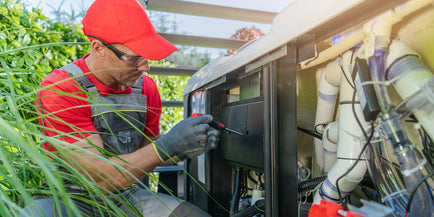
- Electrical wiring and hookup
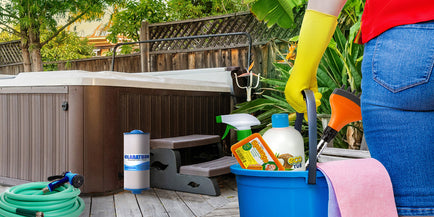
- Cleaning and decontamination
- Repair expense after setup
Before you start shopping, take a test dip in our online Spa
Simulator, especially if you've never owned one before.
You'll likely have some repair work ahead of you, and
this will give you a good basic understanding of how hot tubs
work.
|
| CAUTION:
Electrical repairs and wiring work can be
dangerous, especially around water. Wiring and repairs must be
made by a qualified electrician or spa technician in accordance
with the National Electrical Code and local code requirements.
Regardless of who performs the work, make certain that all
electrical power to the hot tub or spa is disconnected prior to
making any inspections or repairs.
Shut the power off at the service panel, and
as a secondary precaution, disconnect the power to the spa as
well. Do not attempt to perform electrical service connections or
repairs unless you are qualified. |
Finding a Good Used Spa
Although a spa store might seem the logical place to start
shopping, buying a used hot tub from a dealer should really be your
last resort. Dealers are in the business of selling new spas.
Most will have a pre-owned junker or two on the premises, but if you show
interest they will likely try to lure you into buying one of their expensive
new spas. To make similar profits on a used
model, they would have to price it well above its value, much like the
tactics of used car salesmen. See Salesman
Tricks to avoid.
 |
The best place to start is the classified section of your local
newspaper, especially if you live in a larger town. Families are often
forced to sell their hot tubs when they move, and these
operational spas are sometimes good candidates for
consideration. |
Online auction sites are not reliable sources for used hot tubs for
two good reasons: shipping is impractical for most sellers, and buying
one sight-unseen is far too risky.
How Much Should You Pay?
 |
This is a difficult question, and will depend upon a number of
factors including the age of the spa, condition, and features.
Unfortunately for both the buyer and the seller, the price that
the seller paid for his hot tub has little relationship to its
second-hand resale value. We'll explain. |
Put yourself in the seller's shoes for a moment. For example: he
may have paid $6,000 for his hot tub at the local spa store three or
four years ago. $3 grand might sound reasonable-- that's half-price!
But thanks to The Spa Depot's factory-direct to consumer brands like
the high quality
Belize
Spas premium line, a brand new spa with similar features and
warranty can now be had for less than $3,000 delivered.
With
the retail middleman cut out of the deal, the
used spa price in our example (with no warranty) looks a lot less
attractive. Keep this in mind when haggling with
the seller.
What to Avoid
| Like an abandoned car, never run or taken out on the road, a
spa stored empty or not run for a period of time will quickly
begin to deteriorate. Condensation will form on electrical
components causing corrosion and bad connections. Pump motor
shafts can rust and lock up from lack of use. Seals and gaskets
can dry out, shrink and cause future water leakage after
refilling. |
 |
Note also that a spa stored "empty" in sub-freezing temperatures is
a prime candidate for leaks. Why? Even after draining, up to 6 gallons
of water can remain in the pipes, pump and plumbing. When subjected to
very cold temperatures, this water will freeze and expand, causing
plumbing system cracks and fractures. Of course, an unheated spa full
of water can meet the same fate.
 |
Conversely, exposure of an uncovered acrylic shell to heat
from direct sunlight for prolonged periods of time can cause
visible blistering of the acrylic layer, or concealed delamination
of the fiberglass underside shell reinforcement. This often
irreparable damage is accelerated in a hot tub with no water in it.
Amazingly, we have seen stores with brand new, empty uncovered
spas sitting in the parking lot, under the hot summer sun! |
So when shopping for a used hot tub, avoid units which have been
stored or neglected. Only spas which are currently set up and operational
should be considered for the investment of your hard-earned money. Be
sure that the hot tub is filled with water and run for at least 24 hours
with temperature set to
maximum... then perform inspections.
Inspecting & Evaluating Used Spas
It's been said by spa repair technicians that if buying a used
hot tub, you can bet the next $500 in your checkbook that
you'll need service sometime within the next year or so. From our
long experience as the nation's leading replacement parts supplier, we'd
agree-- that's a fairly good assessment.
The repair dollar estimates below can vary widely, but will give
you a rough idea of your risk
exposure when buying used. Repairmen that will make a house call for under
$200, even for the most minor issue, are becoming rare. You will
shoulder all of this burden without the benefit of a new spa's warranty.
Spa Shell
Carefully inspect every inch of the hot tub's shell. This
is the vessel that holds the water-- vitally important.
Since making attractive and effective acrylic shell repairs is
generally not practical, it is best to avoid spas with cracks,
checking, blisters, breaks or any evidence of leaks due to these
defects. |
 |
Shell warp is another insidious problem that is normally impossible
to detect by visual inspection alone. Over time, filled with thousands
of pounds of water, a hot tub's acrylic shell can slowly bend out of
shape if not situated on a perfectly level concrete pad or other hard,
stable foundation. It remains unnoticeable until the spa is relocated
onto a flat surface, where it can now be rocked slightly, corner to
corner.
When the spa is refilled with water on its new, level foundation,
the warped shell may slowly begin to crack or form tiny fractures over
time, which will eventually result in vessel leaks. Walk away if you
see evidence of these problems or if you cannot verify that the hot
tub
was operated on a level surface by its owners.
| Controls |
|
| With the spa running, ask the owner to show you how to operate
the topside control pad. Switch through the various functions,
verifying the operation of high and low jet pump speeds,
thermostat, light, etc. |
 |
Check the various other topside control functions. The air valve in
particular should provide ample air injection to the jets when rotated
fully to the on position, decreasing gradually to no air when
rotated in the opposite direction. If air is still injected when
turned fully off, the valve is defective. Check diverter valves, if so
equipped.
 |
The illustration (left) shows a hot tub's equipment access
door removed to reveal the control system box (2) and pump (1).
Locations of components vary from brand to brand. The top side keypad directs
the operation of the control system-- the digital brain of the
hot tub. |
A rapid clicking or continuous chattering sound coming from the
control system is indicative of defective relay contactors or related
problems which can be very expensive to repair. A burned-out spa light
is a minor issue. Have the bulb replaced to verify that the problem is
the bulb, and not the light control circuit.
Ask to see the owner's manual, an invaluable source of
future reference information, should you decide to buy. You'll also
want to see the repair & maintenance record, same as if you were
purchasing a used automobile or second-hand RV.
 |
Control System Repairs or Replacement:
$250
- $1100+ |
Jets
Most spa jets are flow and direction adjustable. Check each jet with
the spa running to verify these functions. Some jets have ball-bearing
spinners which can become frozen-- make sure these jets spin freely.
Jet bodies themselves are not terribly expensive, but the labor costs
can be high since replacement is often time-consuming.
 |
Jet Replacement (each):
$75+ |
Heating System
Check the water with your own digital oral thermometer. If
it will not reach and maintain 104º F, it has
problems. Compare your temperature reading to the spa's digital
readout to see if they are a pretty close match. If the seller won't
let you do this test, don't buy.
 |
Heating System Repairs:
$100 - $200+ |
Pump Leaks & Motor Replacement
Open the equipment door and check for puddling or anything indicative
of active leaks around the pump shaft. Pump seal leaks are not
unusual, but the repair cost can vary widely depending upon
whether the pump is a common generic or a proprietary model. In some
cases replacing the seals may be sufficient. If the wear and corrosion
is severe, the entire pump may need to be swapped out.
Listen to the pump when the spa is running. You should hear a
strong and steady low-pitched hum from the motor. If you hear grinding, whining or
just about anything else, an expensive
replacement is likely imminent.
 |
Pump Repair or Replacement:
$150 - $450+ |
Avoid Electric Air Blowers
Although popular years ago, most good manufacturers have abandoned
powered air blowers. Air blower orifices can be sources of dangerous
airborne mold and bacteria, since they can't be effectively sanitized
by the treated spa water. Blowers quickly cool down the hot tub water,
wasting large amounts of reheating energy. They are also loud,
sounding like a vacuum cleaner. Modern spas have air-induction
jets which mix air with water, so separate blowers are unnecessary.
Avoid used spas with blowers.
Wood Rot & Vermin
Even a good-looking exterior wood skirt surround can buckle or begin
to fall apart when the spa is moved to a new location, because
underlying wood rot in the framing members is not always visible from
the outside. Skirts rot from the inside out, and from the ground up.
Spas that have been sitting on soil or next to a wall or in a deck
tend to rot out faster that if situated on a concrete slab in an open-air,
well ventilated area.
| The illustration (right) shows the supporting wood structure
of a hot tub with the skirting panels removed. Without removing
the panels, the only way to inspect for rot is to tilt the empty
spa up on its side. |
 |
Wet or rotting wood attracts carpenter ants
and termites, which can quickly devour and weaken the entire
structure. Rodents
have been known to shred the insulation off of the acrylic shell and
plumbing. They love to gnaw
on hoses and nibble wiring, sometimes just enough to weaken things so they
will only break down when the tub is moved.
Inspect for evidence of mice or rat droppings, their calling cards.
If you notice any signs of rot, vermin,
or disintegrated insulation, you'd better put your wallet in your
front pocket and make a fast getaway!
Ozonator
If the spa is equipped with an ozone purification system, be aware
that these degrade over time and will typically be exhausted after
about 36 months. If the spa is older than that, and the owner has not
serviced the unit, it will need a new one or service. Some ozonators
have replacement modules, others require complete replacement.
 |
Ozonator Service:
$75 - $200+ |
Foam Insulation & Vessel Leaks
Carefully check the foam insulation on the hot tub shell's
underside. If you notice damp or badly discolored areas, this is
indicative of leaks. So are any white chalky areas.
| Most of today's
spas feature insulation systems where the shell is coated with a
layer of high density foam with a dead air space within the
insulated cabinet walls. In a used spa, this is superior to a spa
cabinet which is fully-foamed (typically with a low density foam).
Why? Eventually, even the best-maintained spas can spring a leak
which will need to located and fixed. |
 |
It is nearly
impossible to pinpoint a leak in a fully-foamed spa without literally
tearing it apart. Such a repair, even if you can find someone willing to take
it on by digging out the insulation, can be terribly expensive.
Avoid fully-foamed cabinets in used tubs.
 |
Vessel Leaks:
$250 - $1000+ |
| |
|
Energy Consumption
Spa energy efficiency has recently improved dramatically. For
example, several
Belize
Spas can often be operated for about a dollar a day. Avoid spas
over 5 years old. You might save a few bucks up front, but end up
paying huge electrical bills to heat a poorly insulated, obsolete hot tub. |
 |
|
|
|
 |
Poorly Insulated Spa (monthly extra expense):
$25 - $100+ |
Electrical Service & GFCI Tripping
All spas must be connected to an electrical service protected by a
Ground Fault Circuit Interrupter (GFCI) for safety. Any tripping of the GFCI will
immediately cut the power to the spa. This is indicative of an
electrical malfunction requiring the immediate attention of a
qualified electrician and/or spa technician. The culprit could be
almost any of the electrical components. Avoid like the plague used hot tubs with
tripping problems.
Note: Modern 220V spas use 4 wire connections (L1, L2,
neutral, and ground). Older spa equipment used 3-wire service with no
neutral which do not meet today's electrical code
requirements. Also be certain to test the GFCI if the spa has an
integral one (they have a test
button on them). It is common for older ones to go dead, not even
sensing ground faults anymore. This is a dangerous condition that
requires the immediate attention of a qualified electrician.
 |
Electrical Repairs or Upgrades:
$250 - $1000+ |
|
|
|
Spa Cover
Carefully examine the cover-- odds are it may need to be
replaced. If deteriorated, heat leaks will occur at the hinge-fold
and on the spa shell rim due to improper seating of the cover
edges. Most importantly, a heavy cover indicates
water-logged foam-core insulation and zero R-value. |
 |
Check for excessive fading from sun damage to the vinyl. Look for
broken handles or missing cover locks. Check the underside too. If it
reeks strongly of mold or mildew odor, you've got a rotten one which
will require immediate
cover
replacement.
 |
Spa Cover Replacement:
$350 - $400 |
|
|
|
New Filter Cartridge
Replacement of the old filter cartridge is essential for
sanitation. Fortunately they are easy to change and inexpensive
when purchased from The Spa Depot.
Spa
Filter Replacement Guide |
 |
|
|
|
 |
Filter Cartridge:
$25 - $75 |
Chemical Kit
Although we supply a complete professional startup chemical kit with every
new spa we sell, with a used hot tub you'll need to acquire these
items to maintain water sanitization. Although the previous
owner will usually be glad to get rid of the old, stale chemicals on hand, it is not worth the risk to use them when the
health of your family and the quality of your spa water is at stake. You'll save about half the cost
of local retail when you buy your spa chemicals, supplies,
and cleaners online from The Spa Depot.
 |
Spa Chemicals & Supplies:
$75 - $150 |
Moving the Hot Tub
| Don't forget to consider the expense of moving the used hot
tub from the seller's location to your home. You can get free
delivery with a new spa, but buying used also means renting a
flatbed truck or trailer. Spas are heavy, so plan on having 5 or 6
friends on hand (and plenty of pizza) to help with loading and
unloading, or hire a moving company to do it for you. |
 |
|
|
|
 |
Spa Moving Expense:
$75 - $350 |
Site Prep and Setup
Decontamination of the Old Spa
IMPORTANT
| For health and safety, it's absolutely essential that any used
spa be thoroughly decontaminated and properly sanitized prior to
use. Even one that appears clean on the surface can harbor a
virtual witches brew of mold, fungus, bacteria, viruses and algae
deep within the recesses of its plumbing systems, especially if
maintenance was lax. |
 |
These microorganisms reside within biofilm: a sticky emulsion which
coats the hidden pipes and plumbing, comprised of rancid
body oils from the previous users, together with slime,
dirt, hair, dead skin cells, yeast spores and other organic contaminants.
Following our
Spa
Decontamination Procedure is highly recommended prior to bathing
in any used hot tub by your family and loved ones.
|
|