|
How often should I drain my spa?
Depending on usage and type of sanitizing system, a spa
or hot tub with well-maintained water, which is treated with non-chlorine shock,
should be drained and refilled every two to four months. This is necessary because of
the amount of total dissolved solids becomes excessive, making it difficult to
maintain sanitizer effectiveness and water balance.
Back
to Menu
What should
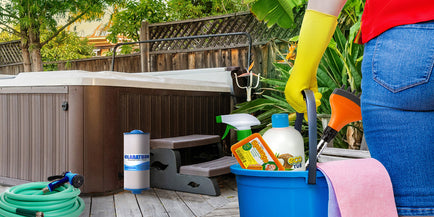
I use to clean my spa?
It is very important that you use a cleaner designed
for spas and hot tubs. While household cleaners are great for cleaning jobs around the
home, they can cause foaming and alter the pH of your water. Quality spa surface
cleaners are safe for all materials, contain no abrasives, are non-toxic and will not
cause water foaming.
Back
to Menu
Is there
a good product for removing tub ring?
A good all surface cleaner such as Clean
All is recommended, since any runoff from periodic cleaning will not
cause foaming or alter water pH.
Back
to Menu
How often
should I clean my filter cartridge?
Depending upon bather load, it is generally a good
practice to rinse your filter cartridge every other week with fresh water from a
garden hose to dislodge hair and other foreign matter. Every 3 to 4 months, and with
each water change, your filter cartridge should be soaked in a filter-cleaning
compound designed for this purpose. We recommend the rotation method: have two filters
on hand, one in the spa and a clean, dry spare. Remove the dirty filter and rinse
thoroughly, being careful to spray between the pleats. Soak the filter in a 5-gallon
bucket of cleaning solution, overnight or according to the instructions on the
package. You can now install your clean spare while the dirty one is soaking. After
soaking, rinse again and set aside to dry completely. With this method, your filters
will last much longer, and you will never have to wait to use your spa.
Back
to Menu
When should
hot tub filters be replaced?
Filters are generally good for about a full year of
usage. After that, they become less efficient in trapping foreign matter because of
deterioration of the media. With the filter rotation method described in "How
often..." (above), this means you would replace a pair of cartridges every 2
years. Filter
Replacement Guide
Back
to Menu
How do you remove calcium scale
from spa filters?
First clean filter with Power
Soak or Eco
Soak, rinse, then soak the cartridge in a solution of one part Acid
Magic to twenty parts water until all bubbling stops. Presto! Scale is
gone! Acid
Magic has the scale removing properties of Muriatic Acid, but is
much safer to use, and has virtually no fumes.
Back
to Menu
Is there
anything I can do to protect my hot tub cover from damage?
The main factors in spa cover deterioration are
sunlight, dirt, and acid rain. Fortunately, there are now great products available to
protect and clean vinyl covers, and greatly extend their life. Select a cover
protectant that contains a UV blocker for fade resistance and use a good cleaner such
as Clean All. Regular use of 303
Protectant will keep the vinyl supple, prevent cracking and fading,
and seal out damaging moisture. Avoid products which contain silicone oil-- these will
actually cause premature failure of the vinyl, when exposed to sunlight. We
recommend 303 Protectant because it is the best product of its kind we have
found, and is also Earth friendly. Don't forget to clean and treat the inside surfaces
of your cover as well-- this is very important.
Back
to Menu
Can scratches
be removed from my spa shell?
Until very recently, the answer would have been no.
Fortunately there is now a product available, Novus
Scratch Removal & Polish Kit, which will actually remove these
scratches, even relatively deep ones, from acrylic and plastic surfaces.
Back
to Menu
Is it
OK to use car wax on my spa shell?
No. Automotive waxes are designed for car finishes, and
will not generally hold up in hot water conditions. Use a product designed
specifically for acrylic or thermoplastic spas such as Gel Gloss.
Back
to Menu
What causes
the dark staining on my plastic spa fittings?
Metals in the water cause these stains. Use a spa stain
and scale inhibitor to prevent this discoloration.
Back
to Menu
Should I
treat the wooden skirt on my spa?
This is partly a matter of personal preference. Some
people prefer the natural graying of unfinished wood. Wood that is treated with a good
water repellant sealer will generally last longer, be more resistant to cracking, and
retain much of the original coloration.
Back
to Menu
If the bulb
in my ozonator burns out, can it be replaced?
Yes! Our Eclipse CD Ozonators and Del UV
Ozonators have replaceable chips (CD) or lamps (UV). Ozonator
Department
Back
to Menu
My spa
is losing water. How can I find the leak?
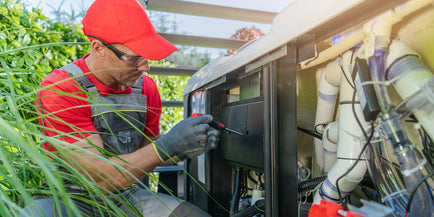
Leaks can be hard to find, but a common cause is pump
seals. Look for water under your pump. Also check around your heater, pressure switch
and all interior plumbing, unions, and connections. If visual inspection does not
isolate the leak, you can try adding some food dye to the water. Another method is to
allow the spa to sit until the water level stabilizes. There is a good chance that you
will find the leak at that level. Yet another method is to fill the spa to correct
level, then run it for a full day, marking the reduced water level with a crayon. Then
refill, and allow it to sit for a full day with nothing running. If the water drops
the same amount in both tests, this tells you that you likely have a shell leak (which
includes jet fittings and/or other connections to the shell.) If it dropped more when
pumps were running, it is more likely a seal or plumbing leak. Use of a quality leak
sealer can save you some repair money. Although not always a permanent fix, they can
be effective on many leaks, with the exception being bad pump seals, which will need
to be replaced.
Back
to Menu
My pump
quit pumping, and now it just makes a humming noise. What happened?
A common cause is a jammed or broken impeller, or the
bearings may have seized. If the motor shaft can be rotated by hand, then the problem
may be a dirty pump switch, defective starter capacitor, burnt motor windings or other
electrical problem with the motor.
Back
to Menu
I can
hear the motor running, but there is no circulation or heat. What is going on?
First, check your filter. A severely clogged filter can
greatly restrict water flow, and with little or no flow, there will be no heat either.
Try running the spa with filter out. If water now circulates properly, replace your
filter(s). Another frequent cause is an air lock in the pump, especially if you just
drained your hot tub. To clear an air lock, first locate and close the valve on the
intake side of your pump. Then, on the outflow side of the pump, loosen the pipe union
just enough turns to allow the trapped air to escape and fill with water. Retighten
union, open intake valve, and run spa to verify correction of the problem. If an air
lock or clogged filter proves not to be the culprit, the cause could be blocked
plumbing, or a damaged or obstructed impeller blade.
Back
to Menu
My spa
is not heating. What's wrong?
First, check your filter. Dirty or clogged filters are
one of the most common causes of heating problems. Try to operate the spa with no
filter in (you may need to push the reset button on your spa pack). If everything
works correctly at this point, then the filter was your problem. Next, check the
heater indicator light. If it is not glowing, then you are likely not getting power to
the heater. You could have a defective or stuck thermostat, high limit switch (check
by pushing reset button), pressure switch, or flow switch. If none of these components
is the culprit, it may be a bad relay or contactor. If the light is on, but water is
not circulating, the heater will not work. If the indicator is on, and water is
circulating, then you most likely have a defective heater element.
Back
to Menu
Why does
my water overheat?
Several conditions could cause water to overheating,
including: a stuck thermostat, a stuck relay or contactor in your spa pack, or even
leaving your pump on high speed for an extended period of time. Another possibility is
a defective high-limit switch, likely in conjunction with one of the above.
Back
to Menu
What is
causing my water temperature to fluctuate?
A temperature sensor unit that is not insulated
properly could cause this. In these cases, the sensor may actually be affected by
changes in air temperature. Other causes could include: a dirty or clogged filter,
sticky or defective thermostat, contactor, or relay.
Back
to Menu
Why aren't
my jets as powerful as they used to be?
The most common cause by far for reduced action in a
spa is clogged or worn-out filter cartridges. If you try running your spa with
the filter out, and this improves performance considerably, then you may have found
the culprit. A broken impeller blade in your pump, or foreign matter
obstructing the impeller can cause this. Bad motor bearings will (often indicated by a
progressively loud motor or a grinding noise) could cause your pump to operate at a
reduced speed, and pump less water. If air jets are weak, check for obstructions,
inspect the blower if so equipped, and check gasket seals around the jet fittings.
If the amount of water coming out of your jets is
normal, but they no longer spin, there are several possible problems: they may
be stuck from scale deposits. In this case, remove the affected jets and soak
them in vinegar for 24 hours to dissolve the calcium. Be sure to treat your spa
water with stain and scale preventer such as our Metal
Free
Stain, Scale, Metal Control to avoid this problem in the future.
Another cause is lint or hair stuck in the jet bearings.
Back
to Menu
What can
cause the GFCI to keep tripping?
A properly functioning Ground Fault Circuit Interrupter
(GFCI) activates when it senses even a very small voltage leak or short to ground.
They are designed to react very quickly. The cause can be many things. To isolate the
culprit, shut-off the power source, then disconnect the system's major components
including: blower, ozonator, pumps, heater, etc. Power on. If it now trips, your
problem is isolated to the wiring or circuit board. If the GFCI does not trip, plug
these things back in one at a time until the GFCI trips again. (Make sure power is off
whenever connecting or disconnecting components). When it trips, you've located the
culprit. If it is not one of these, check for bad wire connections, missing or burnt
insulation or chafes, and loose screws or corrosion on terminals. If that is not the
problem, sometimes a heater element that is going bad will cause the GFCI to trip.
Another cause may be a defective GFCI unit itself. They do not last forever, and
especially in damp locations, they can fail and cause erroneous tripping. Other
electrical devices in your home, especially those with motors, can send a pulse
through the circuit that can actually trigger a GFCI to trip. These include washing
machines, garage door openers, air conditioners, furnaces, and house fans. Monitor
your spa's GFCI to see if it trips when one of these devices is switched on. Make sure
that the supply circuit to the spa is adequate.
| CAUTION:
Electrical repairs can be dangerous. We recommend that
electrical service be referred to a qualified technician. Regardless of who
performs the work, make certain that all electrical power to the hot tub or spa
is disconnected prior to making any inspections or repairs. This information is
provided for educational purposes only. If you hire a qualified technician, this
will give you a better understanding of the diagnostic process involved. |
Back
to Menu
My wooden
hot tub was left empty for a year. Now it leaks like a sieve. Any suggestions?
Wooden tubs should never be allowed to dry-out. This shrinks
the staves, resulting in leaks. It is possible that the wood will
re-absorb enough water over a period of days and expand so that
the leaking will stop after refilling.
Back
to Menu
Which is
better for my hot tub: letting the thermostat determine run times, or setting the
timer for a specific amount of time each day?
The frequent on and off cycles, which you will have if
you allow the thermostat alone to determine the operation of you pump and heater, will
shorten the life of your motor. It is usually better to set your timer to run in
scheduled cycles. For example: 6 hours per day total, set up for two 3 hour segments,
12 hours apart. Actual total run times depend on your spa manufacturer's
recommendations, sanitizing system, and bather load.
Back
to Menu
What can
I use to remove stains and scale from my spa's surface?
You'll need an extra-heavy duty cleaner for this type
of problem. One that was originally recommended to us by a customer is a terrific
product called TLC
Stain & Scale Remover. Apply sparingly with a sponge, then rinse
with water. Follow label instructions.
Back
to Menu
Can we
use our outdoor spa year 'round? Our winters get very cold.
Winter operation of your spa in cold climates is fine,
if you take reasonable precautions to prevent freeze-damage to your equipment. During
very low temperatures, you should either run your spa continually, or set the
thermostat to run the pump(s) at a safe temperature. Check your owner's manual. In
extreme low temperatures, 24-hour operation is the safest bet. It is important to
check your water level daily, because if it gets too low, the pump could air lock.
Remember to keep your filters clean. A clogged filter could cause the flow (pressure)
switch to shut down your pump, and this could result in frozen equipment. Keep a
clean, dry, spare filter on hand at all times, especially in the winter. To save
energy, make sure your air jets are closed when not using the tub. Keep your cover
securely strapped to prevent heat loss. If your cover is in poor condition, consider
replacing it. A waterlogged cover has very little insulating value, and will cost you
a lot in energy waste.
Back
to Menu
Our spa
has some cracks & blisters. Can I repair these myself?
Often you can, especially if the defect is not too
extreme. Small blisters can often be diminished by first heating the affected
area with a hair dryer (on the highest heat setting); then, as blister becomes
pliable, poke a small pin-hole in its center (for releasing the trapped air behind
it), and finally lay it down evenly with hand pressure or a small roller.
Cracks, dents and holes can be repaired with our Plast-Aid
Acrylic & PVC Repair Kit.
Back
to Menu
I'd like to
install an Ozonator. Can you tell me how?
Refer to our Ozonator
Installation Guide for easy, step-by-step instructions.
Back
to Menu
|